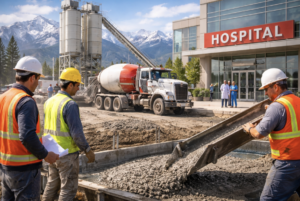
Healthcare construction is one of the most demanding building sectors in Colorado. Hospitals, clinics, outpatient centers, surgical facilities, rehabilitation campuses, and long-term care buildings are not simple structures that can tolerate delays, inconsistent materials, or weak planning. These projects require precision from the ground up, and that starts with concrete. When healthcare systems expand, renovate, or build new facilities, they rely on dependable supply chains that can support strict schedules, structural standards, and long-term performance. That is one reason healthcare facilities across the state continue to depend on Colorado Concrete Batching Plants for consistent production and dependable delivery.
Colorado’s healthcare landscape continues to evolve as providers respond to growth, rural access challenges, funding pressures, emergency preparedness needs, and new construction activity. Recent Colorado health coverage and hospital reporting has highlighted just how much pressure the state’s healthcare systems are under, especially in rural regions and expanding communities. At the same time, hospital associations and health news outlets continue to emphasize the need for resilient infrastructure, modern facilities, and stronger operational support across the state. Those realities make reliable concrete production more than a construction concern. It becomes part of the healthcare support system itself.
Healthcare construction in Colorado requires precision from the beginning
Healthcare buildings are different from many other commercial structures because they must support constant activity, heavy equipment, specialized utilities, infection-control standards, and long service lives. Foundations, floors, walls, loading zones, parking structures, utility corridors, and emergency access routes all need durable concrete placed on schedule and produced to specification. A batching plant that delivers inconsistent mix quality or causes avoidable delivery delays can affect every downstream trade on the jobsite.
This matters even more in Colorado, where climate, elevation, transportation routes, and regional growth can complicate construction planning. Concrete for healthcare projects must often be placed in carefully timed sequences to support structural framing, equipment installation, and interior buildout. For medical campuses, every lost day can delay patient capacity, staffing plans, inspections, and revenue generation. Reliable batching operations help reduce that risk by improving mix consistency, availability, and delivery coordination.
Colorado’s healthcare sector is also managing real system strain. Reporting from CPR and The Colorado Sun has shown ongoing pressure around affordability, rural access, Medicaid-related funding concerns, and emergency medical services. In that kind of environment, construction delays are not small inconveniences. They can interfere with much-needed expansion and modernization efforts. CPR’s Colorado health coverage reporting and The Colorado Sun’s reporting on emergency medical service funding both reflect how important dependable healthcare infrastructure remains statewide.
Reliable concrete supply supports hospitals, clinics, and emergency care expansion
When healthcare providers invest in new space, they are usually doing it for a reason tied directly to patient demand. Population growth, aging communities, service line expansion, outpatient demand, and regional access needs all create pressure for more healthcare capacity. Concrete batching plants support that expansion by helping contractors keep structural work moving with less disruption.
A hospital cannot simply operate like a general office building. It needs reinforced foundations, dependable slabs, specialized loading and ambulance access areas, and often a wide footprint that must be constructed in coordinated phases. Outpatient centers, imaging facilities, urgent care clinics, and specialty treatment buildings all depend on the same basic truth: the structural schedule has to move when it is supposed to move. Reliable batching plants help make that happen by supplying properly produced concrete in the quantities and timing required for demanding jobs.
Colorado hospital and health system activity underscores the point. Becker’s has reported on both expanding hospital project activity in the Denver area and proposed new facilities in growing Colorado communities, showing that healthcare construction remains active where population and service demand are rising. Becker’s report on Denver’s hospital project activity and its coverage of proposed hospitals in a growing Colorado market both point to a broader need for dependable construction inputs that can keep major projects on track.
Concrete reliability matters because healthcare timelines are not casual timelines
Many building projects can absorb moderate disruption. Healthcare projects usually cannot. Contractors working on medical facilities often face fixed milestones tied to inspections, licensing, equipment delivery, staffing preparation, and opening dates. Delays at the concrete phase can ripple outward into steel installation, enclosure, MEP coordination, flooring, wall systems, and final commissioning.
That is why dependable batching capacity is so valuable. Reliable plants help healthcare construction teams maintain schedule discipline, especially on large campuses and phased expansions. They also help reduce the risk of last-minute shortages, inconsistent quality between pours, and jobsite downtime caused by poor dispatch coordination. In healthcare construction, those issues can create major financial consequences.
Colorado’s healthcare news cycle makes it clear that many systems are operating in a high-pressure environment. The Colorado Sun has reported on funding battles tied to medical education support and on broader rural healthcare pressures, while the Colorado Hospital Association continues to highlight access-to-care efforts and emergency preparedness across the state. The Colorado Hospital Association newsroom and its emergency preparedness resources both reinforce that healthcare delivery depends on readiness, coordination, and infrastructure that performs when needed. Reliable concrete production fits directly into that bigger picture because the building itself is part of care readiness.
Colorado healthcare growth and rural access make dependable infrastructure even more important
Colorado is not only dealing with urban growth. It is also balancing the needs of rural hospitals, regional medical centers, and underserved communities that depend on durable, efficient facilities. In many of these areas, a delayed or underbuilt healthcare project is more than a scheduling problem. It can affect access to care for entire communities.
Reliable concrete batching is especially important in rural and regional healthcare development because logistics can already be challenging. Delivery windows may be tighter, alternative supply options may be limited, and weather or distance can intensify risk. A dependable plant can help minimize disruptions and give contractors more confidence when building facilities that matter deeply to local residents.
The state’s healthcare reporting reflects those rural pressures. The Colorado Sun reported that Colorado is receiving significant federal support aimed at improving rural healthcare, and it also covered how a rural hospital found innovative ways to stabilize operations through lab services. Those stories point to a larger truth: rural healthcare in Colorado needs serious investment, and that investment often includes physical facilities that must be built or upgraded correctly. The Colorado Sun’s coverage of rural healthcare funding and its reporting on a rural hospital’s financial strategy both show why durable infrastructure remains essential.
Long-term healthcare performance starts with strong concrete systems
Healthcare owners are not just building for today. They are building for decades of use. Floors must support equipment loads. Foundations must remain stable. Exterior paving and service access areas must hold up under repeated traffic. Mechanical yards, emergency entry points, and support structures all depend on concrete that performs over time. When a batching plant produces dependable mixes and supports disciplined delivery, it contributes directly to the long-term performance of the finished facility.
Concrete also plays a role in resilience. Healthcare buildings must endure heavy use, weather exposure, maintenance demands, and, in some cases, emergency surge conditions. For Colorado facilities facing changing population needs and public health challenges, resilient construction is not optional. It is a practical necessity.
For broader context on the healthcare sector tied to the state, Wikipedia’s list of hospitals in Colorado offers a simple overview of the range of hospitals serving communities across the state. That breadth of care settings helps explain why dependable construction materials matter so much. From urban hospitals to rural regional facilities, strong structural systems remain foundational to reliable care delivery.
Why this matters for healthcare builders, contractors, and facility leaders
For developers, contractors, and healthcare leaders, dependable concrete batching is not just about getting material to the site. It is about protecting schedule integrity, supporting quality control, reducing costly disruptions, and helping new healthcare spaces come online when communities need them. Every healthcare project carries financial, operational, and human importance. Reliable batching plants support all three.
That is especially true in Colorado, where healthcare systems are navigating growth, policy change, access issues, and continued infrastructure needs. A dependable batching operation helps construction teams maintain momentum during one of the most important phases of any build. It supports the kind of consistency that healthcare projects demand and the kind of durability that healthcare owners expect.
Conclusion
Healthcare facilities in Colorado depend on reliable concrete batching plants because modern medical construction leaves little room for inconsistency. Hospitals, clinics, urgent care centers, and rural health facilities need structures that are built on time, built strong, and built to last. In a state where healthcare providers are responding to growth, rural care demands, emergency preparedness concerns, and ongoing funding pressure, dependable concrete production becomes part of the solution.
Reliable batching plants help contractors reduce delays, maintain mix quality, support strict project sequencing, and deliver the structural foundation healthcare facilities require. For Colorado’s medical sector, that reliability matters long before the doors open to patients. It matters at the very beginning, when the concrete is poured and the future of the facility starts taking shape.
